THE SCIENCE OF COLLAGEN
We believe in ingredients that earn their place, not through trend or promise, but through evidence. Before anything is added to a formula, we ask a simple question: what does the research actually say?
This is where we begin with collagen. Not with claims, but with the science itself, what it is, where it's found in the body, and what happens once it's consumed. The research is ongoing, and we've laid it out here as clearly and honestly as we can, sourced throughout, so you can understand exactly what you're taking, and why.
What Is Collagen?
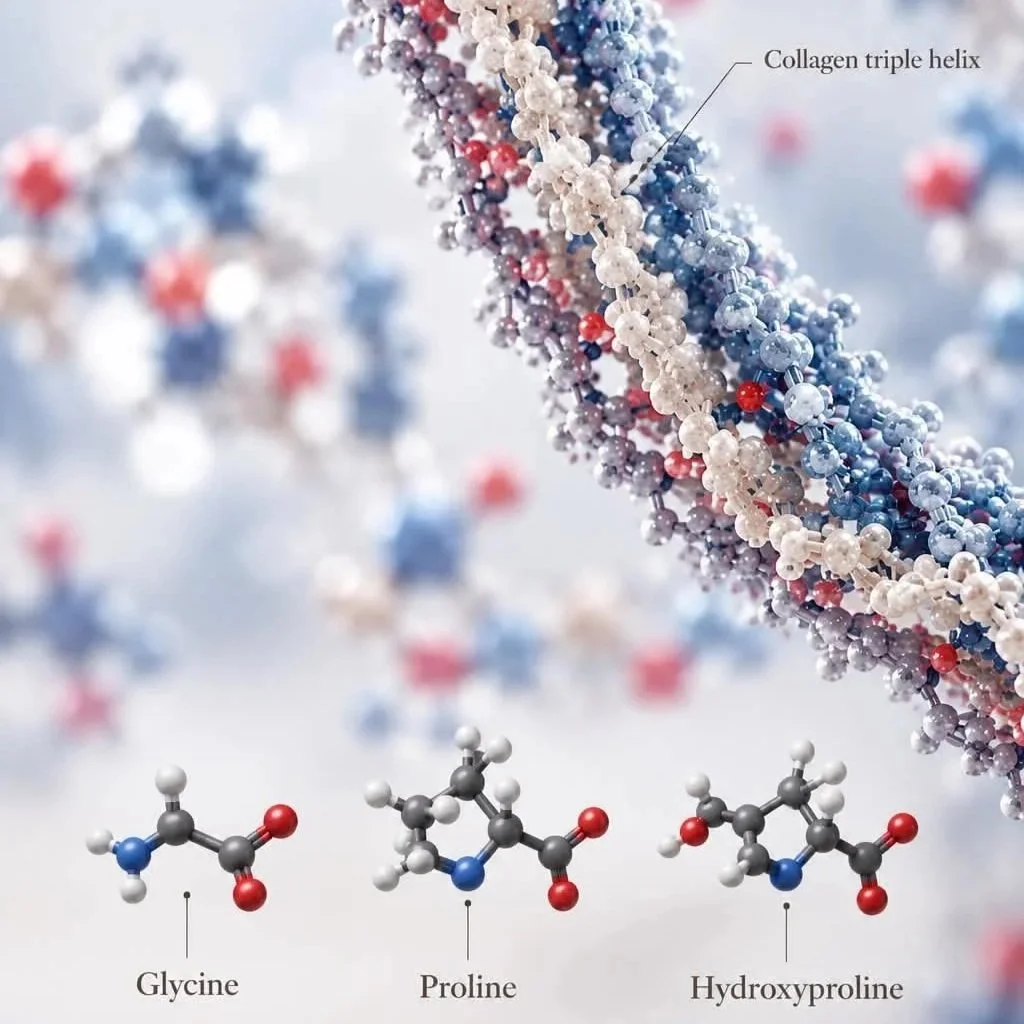
Collagen is the most abundant protein in the human body, a key structural component of connective tissue, giving strength, structure and support throughout the body. Collagen is built from amino acids, glycine, proline and hydroxyproline in particular, which give it its structural properties (Shoulders & Raines, 2009).
Where is collagen found?
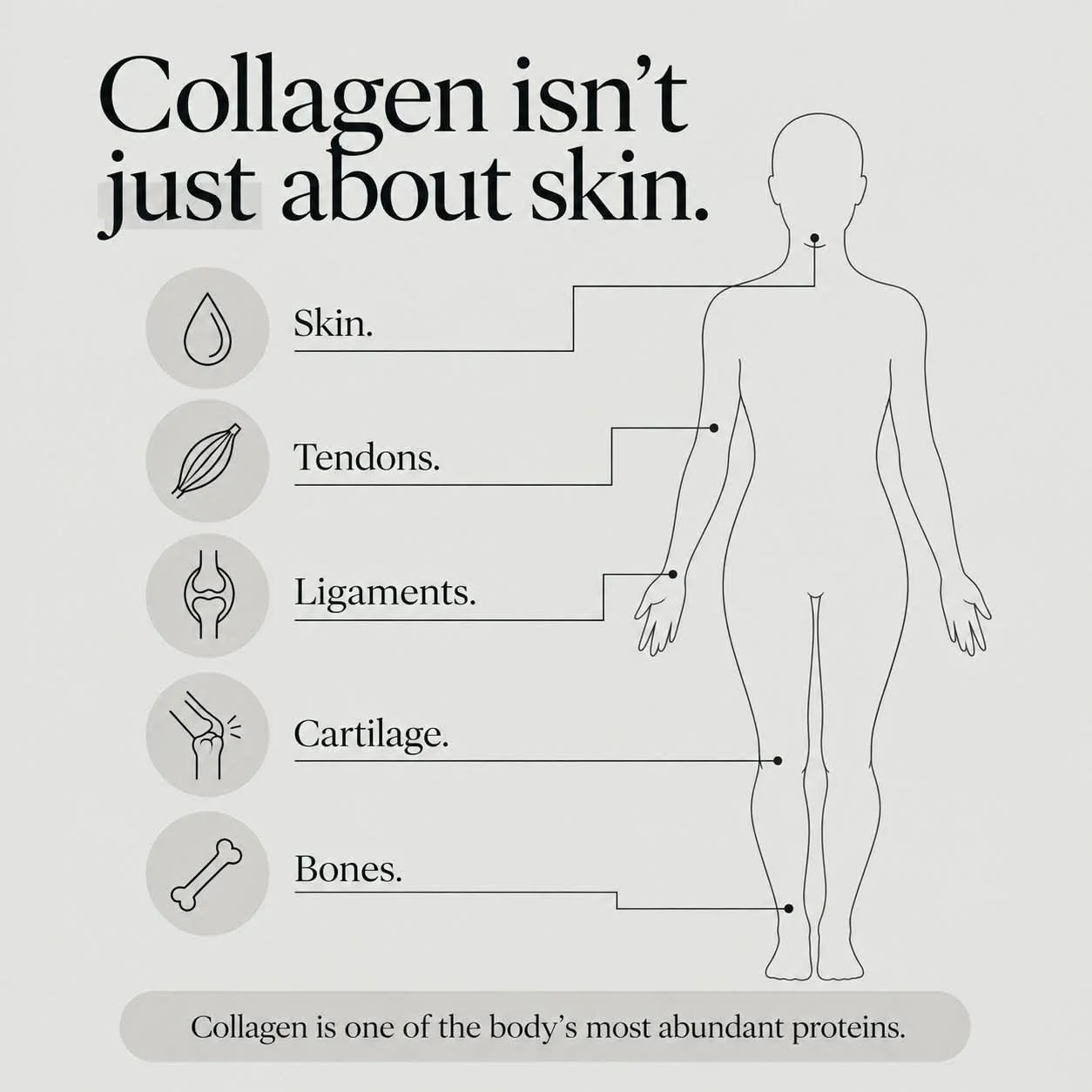
Collagen is present throughout the body, particularly in tissues that rely on structure and support: skin, bones, tendons, ligaments, cartilage, blood vessels and other connective tissue.
Different types are more prominent in different places. Type I collagen, for example, is abundant in skin, bone, tendons and ligaments, while type II is a major component of cartilage (Bielajew et al., 2020; Shenoy et al., 2022).
What Happens to Collagen as We Age?
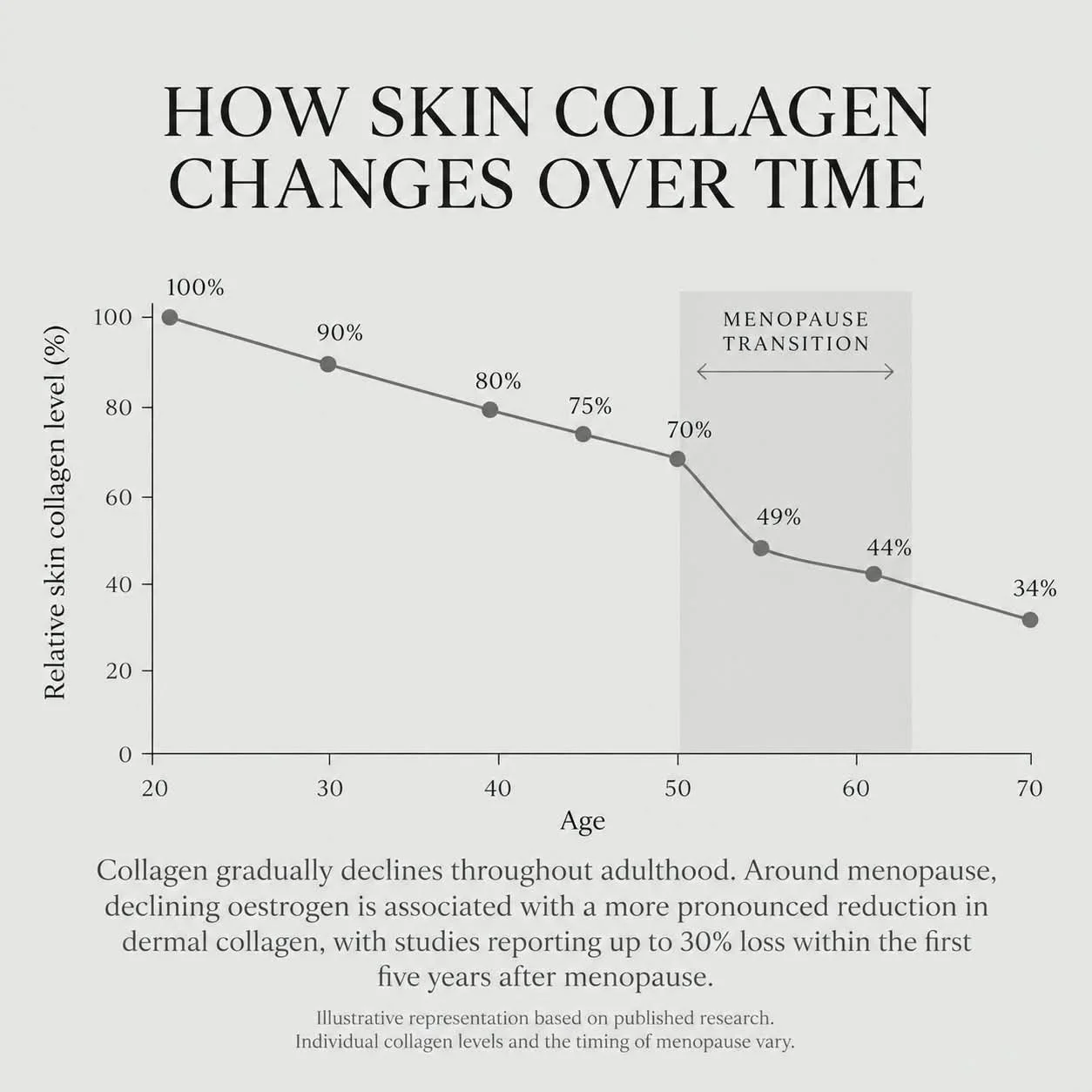
The body continues producing collagen throughout life, but production gradually declines with age, while breakdown and structural changes become more pronounced (Shoulders & Raines, 2009; Bielajew et al., 2020).
In the skin, this contributes to changes many of us begin to notice over time: reduced firmness and elasticity, increased dryness, and the gradual formation of fine lines. This isn't only a matter of age; collagen is continually made and broken down as part of normal tissue maintenance. Over time, the balance shifts: less new collagen is produced, while existing collagen becomes more susceptible to degradation. External factors, including UV exposure and smoking, can accelerate this breakdown further.
Digestion
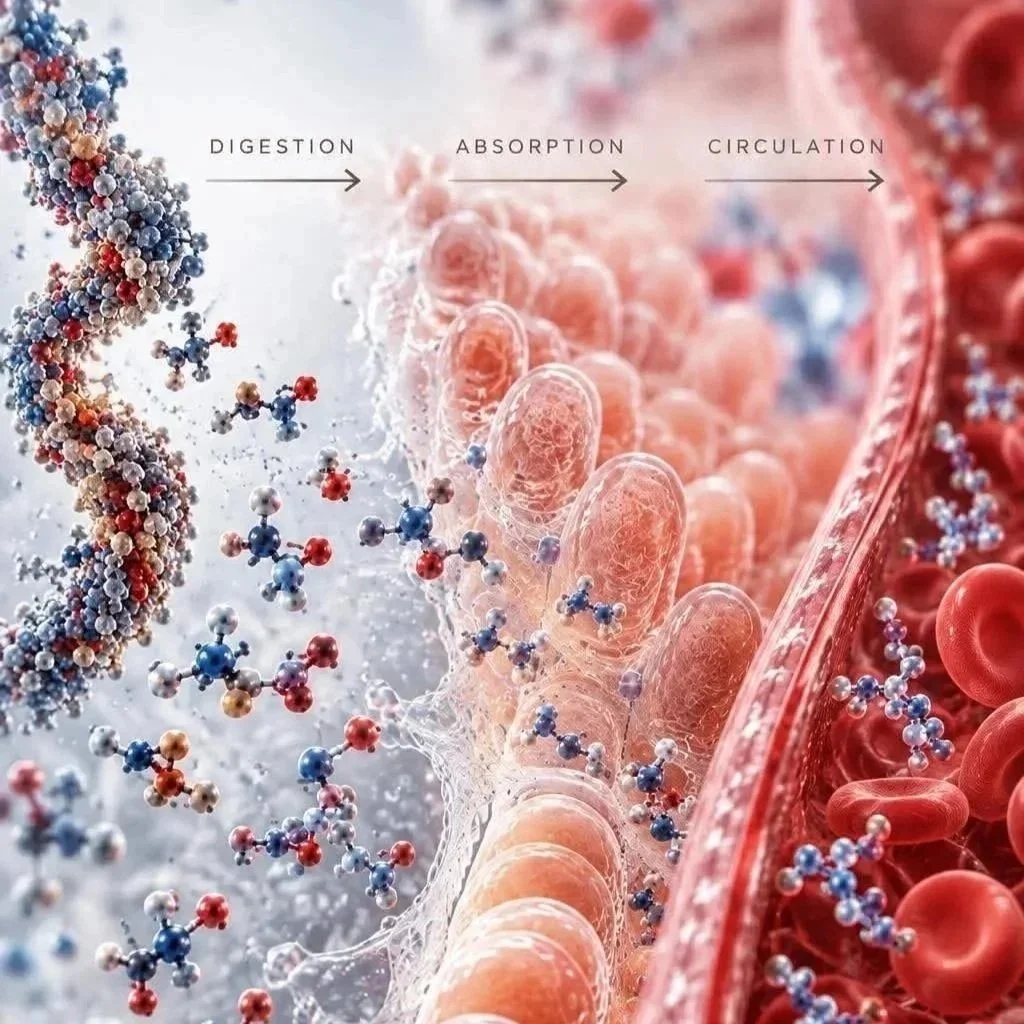
Like other dietary proteins, collagen is digested in the gastrointestinal tract. Because hydrolysed collagen has already been broken into smaller peptide chains, it's further digested into smaller peptides and individual amino acids (Skov et al., 2019).
Absorption
Some of these smaller peptides and amino acids are absorbed through the small intestine (Kleinnijenhuis et al., 2020). Enzymatic hydrolysis has been shown to increase the rate and bioavailability of collagen-derived amino acids compared with non-hydrolysed collagen (Skov et al., 2019).
Circulation
Once absorbed, collagen-derived peptides and amino acids enter the bloodstream and circulate through the body. Human studies have detected specific collagen-derived peptides in blood following oral collagen consumption (Virgilio et al., 2024; Yamamoto et al., 2016), meaning some peptides survive digestion intact rather than being broken down entirely into individual amino acids.
-
Bielajew, B. J., Hu, J. C., & Athanasiou, K. A. (2020). Collagen: Quantification, biomechanics, and role of minor subtypes in cartilage. Nature Reviews Materials, 5, 730–747. https://doi.org/10.1038/s41578-020-0213-1
Kleinnijenhuis, A. J., van Holthoon, F. L., Maathuis, A. J. H., Vanhoecke, B., Prawitt, J., Wauquier, F., & Wittrant, Y. (2020). Non-targeted and targeted analysis of collagen hydrolysates during the course of digestion and absorption. Analytical and Bioanalytical Chemistry, 412, 973–982. https://doi.org/10.1007/s00216-019-02323-x
Shenoy, M., Abdul, N. S., Qamar, Z., Al Bahri, B. M., Al Ghalayini, K. Z. K., & Kakti, A. (2022). Collagen structure, synthesis, and its applications: A systematic review. Cureus, 14(5), e24856. https://doi.org/10.7759/cureus.24856
Shoulders, M. D., & Raines, R. T. (2009). Collagen structure and stability. Annual Review of Biochemistry, 78, 929–958. https://doi.org/10.1146/annurev.biochem.77.032207.120833
Skov, K., Oxfeldt, M., Thøgersen, R., Hansen, M., & Bertram, H. C. (2019). Enzymatic hydrolysis of a collagen hydrolysate enhances postprandial absorption rate—A randomized controlled trial. Nutrients, 11(5), 1064. https://doi.org/10.3390/nu11051064
Virgilio, N., Schön, C., Mödinger, Y., van der Steen, B., Vleminckx, S., van Holthoon, F. L., Kleinnijenhuis, A. J., Silva, C. I. F., & Prawitt, J. (2024). Absorption of bioactive peptides following collagen hydrolysate intake: A randomized, double-blind crossover study in healthy individuals. Frontiers in Nutrition, 11, 1416643. https://doi.org/10.3389/fnut.2024.1416643
Yamamoto, S., Deguchi, K., Onuma, M., Numata, N., & Sakai, Y. (2016). Absorption and urinary excretion of peptides after collagen tripeptide ingestion in humans. Biological & Pharmaceutical Bulletin, 39(3), 428–434. https://doi.org/10.1248/bpb.b15-00624
Sources: